SHANGHAI, SHANGHAI, CHINA, August 25, 2026 /EINPresswire.com/ — The global electric vehicle sector faces a critical technological pivot point in 2026. High-performance electric motors now operate at rotational speeds exceeding twenty thousand revolutions per minute. This unprecedented rotational velocity amplifies even the smallest microscopic imperfections within the rotor assembly. Consequently, vehicular vibration, acoustic harshness, and bearing wear escalate dramatically if left uncorrected. To combat these dynamic challenges, global automotive tier-one suppliers require highly sophisticated manufacturing solutions. Achieving optimal structural equilibrium during high-frequency production cycles demands exceptional engineering expertise. Within this highly competitive industrial landscape, precision balancing machinery acts as the ultimate gatekeeper of quality control. Advanced automated correction eliminates structural defects before components enter the final assembly phase. This systematic optimization ensures a completely silent cabin environment and extends the operating lifespan of critical powertrain components. Through relentless research and development, one prominent manufacturing enterprise delivers unparalleled mechanical precision to the international assembly line. By merging intelligent algorithms with robust architecture, the enterprise reinforces its global reputation as the definitive China Best E Mobility Rotor Automaric Balancing Supplier. This strategic evolution highlights how targeted automated correction eliminates manufacturing defects while raising the overall performance benchmark for next-generation electric mobility applications.
Deciphering the High-Speed Rotor Challenge: Why Algorithmic Precision Dictates EV Performance
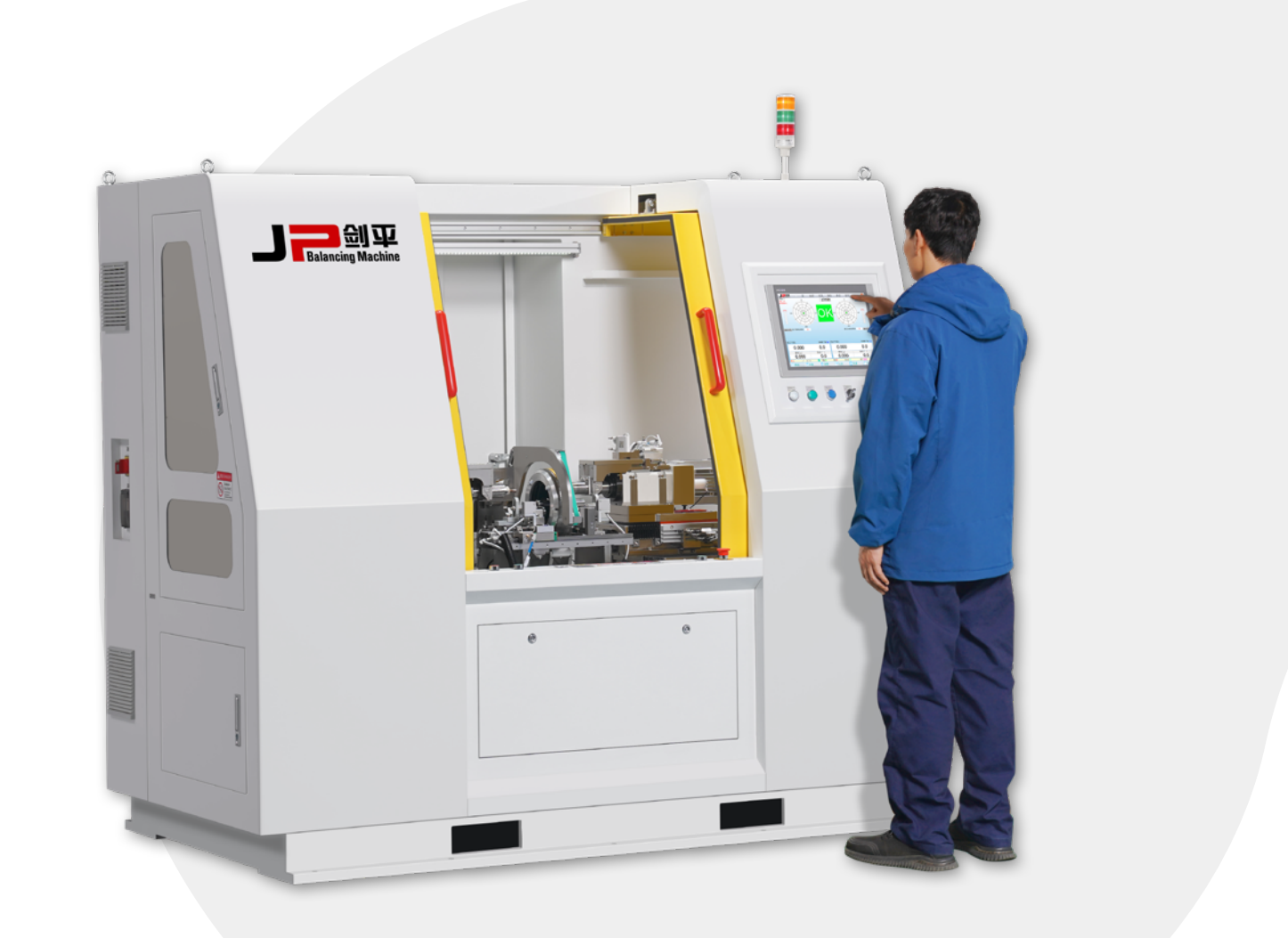
Electric vehicle architecture demands a radical departure from traditional internal combustion manufacturing philosophy. Modern traction motors require exceptional rotational stability to maximize energy conversion efficiency and eliminate passenger cabin hum. When a rotor spins at extreme velocities, centripetal force intensifies any residual mass asymmetry, creating immense mechanical stress. Traditional diagnostic systems often fail to isolate these complex dynamic forces during high-speed operation. Therefore, modern production facilities require advanced measurement technologies that can interpret multi-plane vibration data simultaneously. To address this necessity, JP develops proprietary electronic measuring systems that serve as the computational core of its balancing equipment. These intelligent systems handle highly intricate software calculations, including electronic compensation, customized tooling fixture adjustments, and real-time dynamic deflection tracking. Operators interact with these powerful processors through a highly intuitive touchscreen human-machine interface. This specialized design allows factory technicians to adjust rotor calibration parameters within seconds, minimizing setup bottlenecks. By converting complex mechanical anomalies into precise digital correction coordinates, the technology removes human calculation error completely. Consequently, manufacturers achieve consistent quality standards, which directly enhances the durability of the final electric vehicle powertrain. This granular level of control establishes a new industry benchmark for high-performance thermal and acoustic management.
Architectural Mastery: How JP’s Modular Multi-Station Matrix Redefines Assembly Lines
High-throughput automotive manufacturing leaves no room for operational inefficiency or manual intervention. Plant managers require highly flexible machinery configurations that adapt to evolving rotor blueprints without extending cycle times. To satisfy these rigorous demands, JP (Shanghai Jianping Dynamic Balancing Machine Manufacturing Co., Ltd) provides an extensive portfolio of automated balancing solutions. The company designs specialized single-station, double-station, and multi-station hardware matrices that execute measurement and physical correction in a unified workflow. For instance, the A1WZ1-20 single-station automatic balancing machine offers rapid changeover capabilities for facilities running diverse product varieties. This flexible entry-level option delivers superb measurement precision and high reliability while maintaining a highly compact factory footprint. Meanwhile, high-volume production lines utilize the A2WZ1-5 double-station machine or the heavy-duty PHQ-50-XX double-plane drilling system. These advanced models execute unbalance calculation and structural milling simultaneously, significantly accelerating manufacturing throughput. For maximum volume requirements, the four-station end surface drilling and milling automatic balancer represents the absolute pinnacle of process engineering. This system distributes separate tasks, such as loading, initial measurement, drilling correction, and independent auditing, across four specialized zones. Furthermore, this advanced architecture masters complex engineering challenges, including the balancing of shaftless electric vehicle rotors that feature intricate internal support structures.
The Modular Ecosystem: Future-Proofing Factory Automation (MES Linkage)
Modern industrial manufacturing relies heavily on digital connectivity and comprehensive data traceability. Automotive tier-one brands require deep insights into every single component that passes through the assembly line. Because of this requirement, specialized balancing hardware must operate as an active node within a larger digital factory network. The modular design philosophy ensures that each automated system scales up effortlessly to meet modern smart factory expectations. Technicians can easily integrate auxiliary modules, such as automated pneumatic gantry arms, robotic pick-and-place mechanisms, and high-speed laser engraving tools. In addition, the software architecture features native support for industrial manufacturing execution systems, commonly known as MES. The machine scans individual component barcodes, logs precise initial unbalance metrics, executes the correction sequence, and stores the final verification data. This seamless transmission of digital information creates a completely transparent quality assurance loop. Production managers can effortlessly review real-time statistical reports, evaluate operator cycle times, and track historical performance trends from remote locations. If a discrepancy arises, the system triggers automated sorting mechanisms to isolate substandard workpieces instantly. Ultimately, this comprehensive digital integration protects automotive brands from expensive product recalls while optimizing overall factory efficiency and enhancing cooperative customer relationships.
Beyond the Hardware: Tier-1 Automotive Trust and Lifecycle Symbiosis
Acquiring premium manufacturing equipment involves long-term operational trust and strategic engineering collaboration. Global automotive leaders look for reliable manufacturing partners who demonstrate a proven history of large-scale industrial deployment. Shanghai Jianping Dynamic Balancing Machine Manufacturing Co., Ltd satisfies this criteria by maintaining an extensive footprint within the global automotive supply chain. The company has secured consecutive major contracts, including the delivery of over one hundred automatic balancing machines to prominent electric vehicle pioneers like BYD. This massive commercial success confirms the absolute reliability of the technology under continuous, high-stress factory conditions. Moreover, the enterprise expands its global market influence through its highly advanced manufacturing facilities and engineering capabilities. Beyond the physical machinery, the manufacturer provides an exhaustive lifecycle support framework to protect client investments. Dedicated service technicians handle initial setup, calibrate mechanical sensors, and deliver comprehensive operator training programs. The software engineers provide remote diagnostic services and execute over-the-air updates for the human-machine interface and programmable logic controllers. This proactive maintenance strategy minimizes unexpected factory downtime and ensures that the balancing systems remain compatible with future rotor designs.
Conclusion: Anchoring the Next Generation of Global E-Mobility Driving Dynamics
The transition toward sustainable electric mobility demands absolute mechanical perfection at every stage of production. As motor rotational speeds continue to climb, the significance of flawless dynamic balance will only intensify. JP continues to lead this crucial sector by delivering an exceptional blend of algorithmic sophistication, robust mechanical engineering, and comprehensive digital connectivity. The manufacturer eliminates the traditional compromise between high processing speed and extreme measurement accuracy. By providing scalable, multi-station automated solutions, the enterprise helps global automakers navigate the complex engineering demands of tomorrow. Procurement teams and factory engineers can optimize their automated assembly lines by collaborating directly with experienced balance specialists. Investing in superior balancing technology ensures long-term mechanical reliability and delivers the whisper-quiet driving experience that modern electric vehicle consumers expect. Explore advanced balancing technologies by visiting the official corporate gateway at https://www.jp-balancer.com/.
Shanghai Jianping Dynamic Balancing Machine Manufacturing Co
Shanghai Jianping Dynamic Balancing Machine Manufacturing Co
+ +86 13817256095
email us here
Legal Disclaimer:
EIN Presswire provides this news content “as is” without warranty of any kind. We do not accept any responsibility or liability
for the accuracy, content, images, videos, licenses, completeness, legality, or reliability of the information contained in this
article. If you have any complaints or copyright issues related to this article, kindly contact the author above.

Media gallery