
Non-UPF Verified Surpasses 300 Products as Demand for Food Processing Transparency Grows
PR Newswire
BELLINGHAM, Wash., Sept. 18, 2026
Program introduces a new consumer app that lets shoppers scan products, learn about food processing and ask their favorite brands to pursue verification
BELLINGHAM, Wash., Sept. 18, 2026 /PRNewswire/ — Since opening for enrollment on January 21, 2026, the Non-UPF Verified program has grown to 304 verified products across 23 brands, reflecting demand for clearer information and greater transparency around how food is made.
The milestone follows a Sept. 17, NBC TODAY segment featuring Non-GMO Project CEO Megan Westgate and Simple Mills President Michelle Lorge exploring ultraprocessed foods, what processing can mean for the foods we eat and how Non-UPF Verified is helping shoppers make more informed choices.
“When we launched Non-UPF Verified earlier this year, we knew people were asking deeper questions about how their food is made,” said Westgate. “Seeing more than 300 products achieve verification in a matter of months shows that brands are ready to meet that demand with greater transparency. People deserve meaningful information that goes beyond what they can see on an ingredient list. Verification means we’ve done the work behind the scenes to understand how a product was actually made.”
A new tool for looking beyond the label
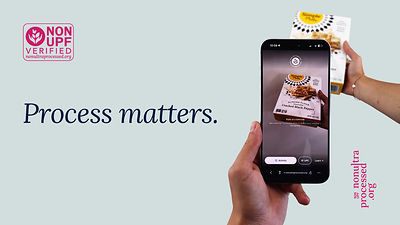
Now, a new Non-UPF Verified app is putting that information directly into shoppers’ hands. The app allows users to scan the barcode on a packaged food to see whether it is Non-UPF Verified and learn more about what the certification means. If a product is not Verified, shoppers can request verification with a tap, creating a direct signal of consumer demand that can be shared with food makers.
“We don’t just want people to change their shopping habits; we want to provide them with a way to engage and participate,” Westgate said. “Every scan offers an opportunity to learn, and every request for verification signals to food brands that consumers want to be informed about how their food is made. This informed participation is key to creating meaningful change in the food system.”
The app builds on the Non-GMO Project’s relationships with more than 5,000 food brands across North America, helping connect consumer interest with the companies that make the foods shoppers buy every day.
Nearly 20 years of independent verification
Built by the nonprofit behind the Non-GMO Project Verified Butterfly, Non-UPF Verified brings nearly two decades of experience in independent food certification to one of today’s biggest food conversations: What does “ultraprocessed” actually mean?
Non-UPF Verified is the first third-party certification program to use a rigorous standard specifically designed to evaluate how food is processed. The Standard was developed with input from experts across a range of fields. The program looks beyond the label, evaluating both what goes into a food and the processes used to make it.
Products must meet rigorous requirements for ingredient integrity and formulation, and processing limits and methods. At least 70% of a product’s ingredients must meet the Standard’s requirements for permissible minimal or moderate processing, while certain ingredients and processing methods associated with ultraprocessed foods are restricted or prohibited.
Verified products now span 15 food and beverage categories and include products from brands such as Amy’s Kitchen, Simple Mills, Spindrift and Chomps. Another 41 brands are currently seeking verification, pointing to continued growth in the months ahead.
A growing national conversation about ultraprocessed foods
The growth of Non-UPF Verified comes as the question of how to define ultraprocessed food moves beyond research and into public policy. In California, lawmakers recently passed AB 2244, legislation that would establish a state-administered Non-Ultraprocessed Certified program if signed into law.
While both approaches reflect growing demand for clearer information about food processing, they take different paths. California’s proposed program would determine eligibility using information available from a product’s ingredients and nutritional profile. Non-UPF Verified goes further by evaluating the processing methods used to make the food, information that often cannot be found on the package.
That distinction draws on nearly 20 years of experience from the Non-GMO Project, where independent verification has long required looking beyond what consumers can see on a label and working directly with food makers and their supply chains to understand how products are made.
“We welcome the growing conversation about food processing and the opportunity to bring more transparency to how food is made,” Westgate said. “There is real value in policymakers, researchers, food makers and certifiers bringing their different perspectives to this work. For us, processing itself needs to be part of the conversation. After nearly 20 years of verification work, we know that some of the most important information about a food simply isn’t visible on the package.”
“Our hope is to bring what we’ve learned to the table and help build a shared understanding of food processing that is useful for consumers, workable for the industry and supports a food system that truly nourishes life.”
Find, scan and request Non-UPF Verified products
Consumers can explore Non-UPF Verified products at nonultraprocessed.org/product-finder. The Non-UPF Verified app is available for iOS and Android users. Learn more at nonultraprocessed.org/non-upf-verified-app/.
Brands interested in pursuing verification can learn more at nonultraprocessed.org.
About the Non-GMO Project
The Non-GMO Project is a mission-driven nonprofit with nearly 20 years of experience in independent food verification. Today, the organization operates two verification programs: Non-GMO Project Verified, represented by the trusted Butterfly seal on more than 63,000 products, and Non-UPF Verified, which brings greater transparency to how food is made by evaluating ingredients, formulation and processing.
Together, these programs reflect the organization’s growing commitment to food integrity and its vision for a food system that nourishes people and the planet. Learn more at nongmoproject.org and nonultraprocessed.org.
Media Contact: press@nongmoproject.org | +1 (360) 255-7704
 View original content to download multimedia:https://www.prnewswire.com/news-releases/non-upf-verified-surpasses-300-products-as-demand-for-food-processing-transparency-grows-302883048.html
SOURCE Non-GMO Project


